
Find Who Owns a Marshall County Property
Use the Marshall property portal for discovery, then confirm through the Probate land index. The county tax search is the official address-to-owner starting screen. Keep the parcel identifier, tax year, legal description, and recording date next to the name.
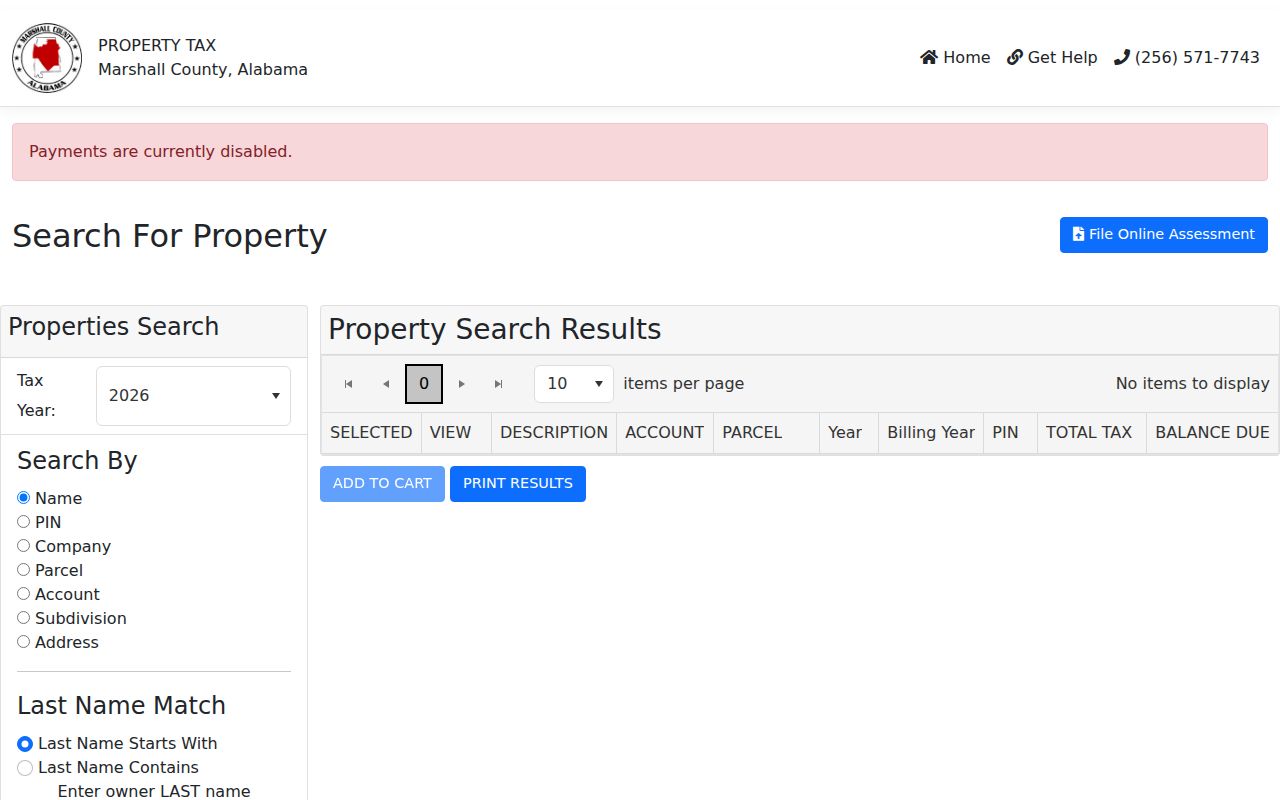
The screen confirms the search route. The deed stays the separate confirmation source.
- Normalize the address and search by Address; retry by name, company, parcel, PIN, account, or subdivision.
- Record the displayed owner, mailing address, situs, identifiers, and tax year.
- Confirm the latest grantee and legal description in the Marshall Probate portal.
- For an entity, consult Alabama business records.
Where Marshall County Ownership Appears
The Revenue Commissioner maintains the tax cards, bills, and parcel mapping. Probate records the deeds and related instruments, and neither office's records should be quietly swapped for the other's.
| Source | Owner Info It Gives | Access |
|---|---|---|
| Revenue tax roll | Displayed owner, mailing and parcel clues | Public web search |
| Probate land index | Grantor, grantee, instrument, book/page | Paid portal or office |
| Secretary of State | Entity filing context | State web search |
| Revenue GIS | Parcel location and nearby geometry | Public viewer |
A tax bill mailing name tells you little about who actually lives at the property. In Marshall County, an LLC, a trust, an estate, an absentee owner, or a buyer who closed last month can all make the owner of record look nothing like the occupant.
Account for Marshall County's Record Clocks
Marshall County updates its records on several clocks at once. Deed recording, assessor updates, GIS refreshes, tax billing, and improvement reporting each run on their own schedule. Each one runs on its own clock. County guidance even warns that a new buyer may get a tax bill still bearing the prior owner's name. The bill may still bear the prior owner's name. That is a timing issue, not an ownership dispute. The newest recorded deed settles it.
Improvements reported after October 1 can take up to two years to show up. That lag affects property data and value, not the ownership date itself. Note: Pair every owner answer with a displayed year or recording date.
Read Estate, Trust, and LLC Names Carefully
Estate transfers can be layered work in Marshall County deed records. One may require both a probate case and a recorded land instrument. A will explains who holds authority. Yet it never replaces the operative deed or court order.
Trust and LLC names demand extra care in a property search. Spell the name several ways when checking the deed index. Match legal descriptions and book/page references rather than settling for a similar name.
- Owner of record
- The party a specific public record displays.
- Grantee
- The receiving party in a conveyance.
- Situs
- The physical property address, distinct from tax mail.
- Title
- The legal interest that a lookup alone cannot conclusively determine.
Use Marshall GIS for Land
The Marshall ISV map links each parcel shape to its identifier and neighboring tracts. It shines when an address is vague or a lakefront polygon looks odd. Its geometry and owner label are reference data only, not proof of occupancy or title.
Monitor Your Own Name With R.E.A.A.C.T.
Marshall Probate offers a free R.E.A.A.C.T. alert that watches recording activity in the county. You register the name variants you want tracked. When a recorded document matches, the service sends word. Common names produce false matches, so verify anything that lands. Coverage stops at the county line, too. An alert signals a match only, never a finding of fraud or ownership.
When the Address Search Misses
Clean up the address before you blame the search. Strip down the street number, directional, street type, unit, city, and ZIP. Consider older spellings too. The tax portal is flexible beyond addresses. It also searches by owner last name, company name, parcel, PIN, account, or subdivision. Results come back labeled with Description, Account, Parcel, Year, Billing Year, PIN, Total Tax, and Balance Due.
A balance due is only a balance. It says nothing about ownership or lien priority. Treat the result as a way to pin down the parcel. Then chase the owner field and the recorded deed from there. One caution: skip guessing at a Marshall APN prefix. The county publishes no verified format guide.
Note: The parcel number, not the street address, is the anchor. Everything that follows in Marshall County property records keys off it.
Confirm the Legal Description
Marshall County recording rules demand a legal description on deeds and mortgages. A parcel or APN is optional. That gap matters. Lot and block, the subdivision name, metes-and-bounds text, and book/page cross-references confirm a match far better than a street address ever can.
Stuck on a messy chain? The Land Title Association passes along an abstractor's tip. The assessor keeps deed copies alongside parcel cards. That is an insider lead worth pursuing. Call the office to confirm what is available before counting on counter access in Marshall County.
Know When the Owner Question Needs Help
Some owner questions outgrow a simple lookup. Multiple deeds, estate orders, foreclosure instruments, boundary fights, or unresolved liens can pile onto one parcel. That pushes a name search into full title territory. Probate records the instruments. It will not hand you a title opinion. Revenue says plainly that it does not arbitrate ownership disputes.
A purchase or a contested interest may be on the line. Bring in a title professional or an attorney. They can work through the complete chain. They can also weigh the exceptions and the current legal effect of every document. The public workflow still earns its keep here. It gathers the identifiers you need to ask one focused, well-armed question about Marshall County property records.
Use Every Marshall Ownership Access Channel
Start with the free routes. The tax portal and the GIS map will usually surface the current owner of record. Neither one costs anything. For older deeds, probate offers a paid index that reaches back only to about 1990. Anything earlier lives in courthouse books, microfilm, archives, or an abstractor's file. The recording office will copy and mail records on request. Its staff will not run the search for you. When you order, give exact names. Also give a date range, a property description, and a book and page reference. Confirm the current charges for copies and certifications before sending payment.
Resolve Conflicting Owner Names
Suppose Revenue shows one owner and the newest deed shows another. Compare dates first, then identifiers and legal descriptions. A correction deed, an estate conveyance, or a foreclosure may sit between them. A tax deed may sit between them. Report the mismatch plainly until the records reconcile. Never assume joint ownership that the documents do not state.
Keep the Marshall Owner Evidence Together
A solid owner note can be reproduced by anyone. Record the normalized address. Note the search mode, the Description, the Account, and the Parcel or PIN. Record the tax year. Add the owner field, the mailing field, and the deed type. Include the grantee, the record date, the book and page, and the matching legal-description language. Note whether you viewed a portal image or only an index row. That distinction keeps a promising lead from being mistaken for documentary proof.
Searching by subdivision or company name? Save the spelling exactly as entered. Entity suffixes, trust abbreviations, estates, initials, and married names can split one ownership trail. One trail may span several index variants in Marshall County property records. Search those variants deliberately, but never merge them without a land-specific match.
Ask Marshall Offices a Targeted Owner Question
Revenue staff can pull up an existing property card when you call or stop by. They can walk you through its tax fields. Probate handles the recorded instruments themselves. Go in with a targeted request: parcel number or account, owner name variant, legal description, date range, and the record you want. Alabama's open-records baseline lets the public inspect and copy public writings, with statutory exceptions. It never obliges an office to run a title search for you.
Whether you visit or mail it in, ask for the exact deed, correction, plat, or cross-referenced instrument you already identified. Older chains often live in books or microfilm outside the online window. Say up front if you need certified copies, before fees are calculated. Confirm the current certification wording with staff.
Limits of a Marshall Owner Lookup
A lookup result can't settle everything. It cannot establish occupancy, every beneficial interest, or unrecorded claims. It also cannot settle lien priority, boundary location, or clear title. Before a purchase or a disputed interest, gather the documents and get qualified title advice.
A company sometimes shows up as grantee. The Alabama Secretary of State business-entity search helps confirm its exact legal name and filing details. A registered agent or business address proves nothing about land. Take the precise entity name back to the deed index and match the legal description. UCC records may reveal a collateral filing. But they don't replace a real-estate deed or show who holds title to the parcel.
Estate ownership runs on two tracks. A probate case names the representative and their authority. The land index shows whether a deed or other instrument was actually recorded. An heir list, obituary, or tax mailing name is not an ownership claim. Confirm the transfer document, the capacity, the recording date, and the parcel description. For chains older than the 1990 online window, work through deed books and direct and reverse indexes. Microfilm and archival finding aids fill the gaps. Then verify the reference with Probate.
Write down the date of every owner result. The newest screen isn't always the newest legal instrument. Source dates keep the comparison honest.
Lawful use. Marshall County owner information supports property diligence and personal research; never use it to stalk, harass, intimidate, or harm anyone.