
Trace Former Marshall County Owners
Work from the current deed backward through grantors and grantees. Per the Land Title Association, Marshall's paid online land records cover a limited date range, roughly 1990 to current, and that coverage should be confirmed live. The Marshall Probate portal is the land-record doorway for starting the chain.
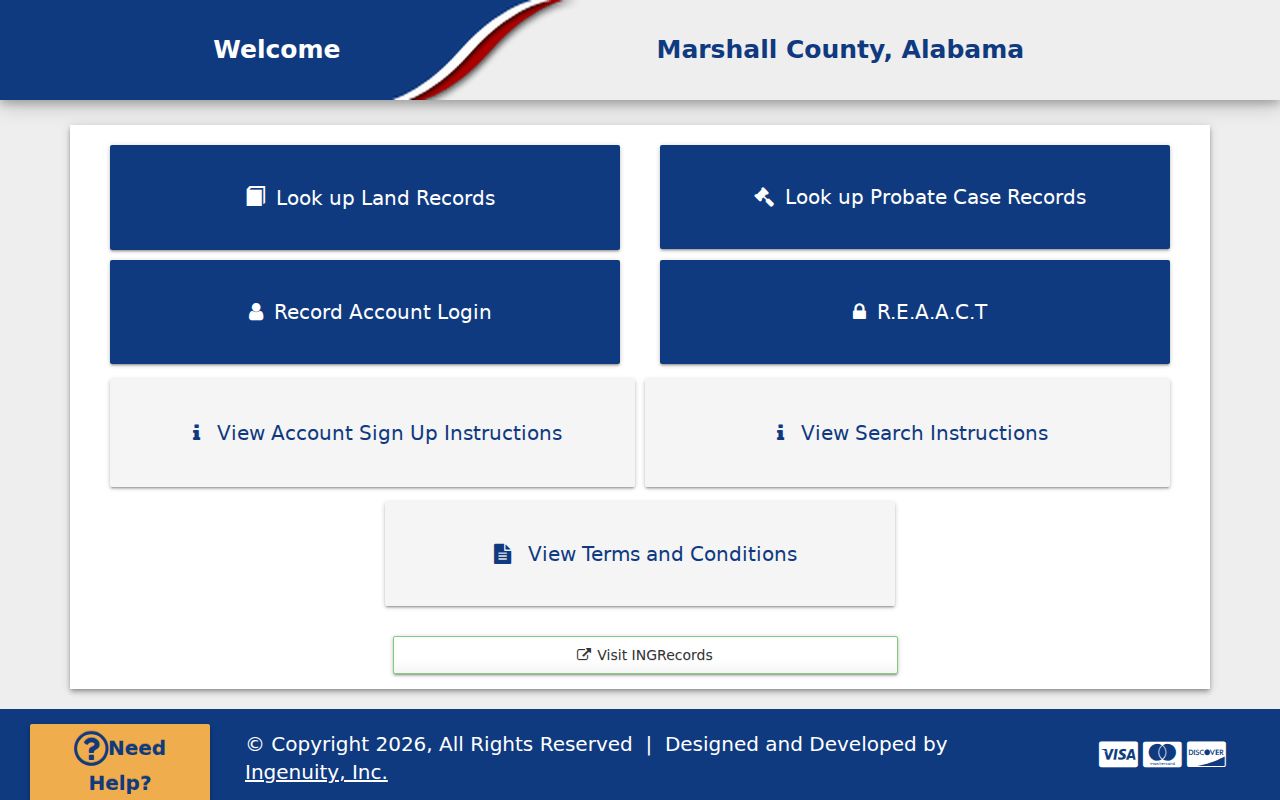
That page points to the county source itself. The dated chain still has to come from the actual index and the older deed books it references.
| Source | Years It Covers | Where Held | What It Shows |
|---|---|---|---|
| Probate online index | About 1990-current | ING portal | Party and instrument leads |
| Deed books | Earlier county era | Probate office | Recorded conveyances |
| FamilySearch collection | Mixed through 2017 | Online/affiliate access | Indexed archival leads |
| Valley Leaves indexes | Books A-T | Historical publication | Older-chain finding aids |
Start online for a recent transfer, then move into Probate books for the earlier chain. FamilySearch and historical indexes suggest possible entries, but the county instrument remains the record that counts.
Walk the Marshall County Deed Chain Backward
Begin with the newest confirmed grantee, whether that is a person or an entity. Before adding any prior transfer to the chain, its legal description or cross-reference has to tie it to the same land.
- Find the current acquisition deed and confirm the parcel by legal description.
- Record its grantor, grantee, type, date, and book/page.
- Search that grantor as a grantee to locate the prior acquisition.
- Repeat with name variants; move to books and archival indexes before the online cutoff.
- Grantor / grantee
- The conveying and receiving parties named in a deed.
- Chain of title
- The documented sequence of instruments affecting the same land.
- Legal description
- The land-specific description that remains useful when addresses change.
Search Grantor and Grantee Roles Deliberately
The ING search controls cover Grantor, Grantee, and Assignee roles, date range, instrument type, book/page, starts-with matching, filters, sorting, and document view. The controls also include cross-references. Moving backward is a two-step rhythm. First search the present owner as grantee to find the acquisition. Then search that seller as grantee to reach the transfer before it. Write down the exact role beside every hit.
Names are slippery, so test middle initials, married names, estates, trusts, LLC spellings, and abbreviations. A common-name match stays weak. It holds only when a legal description or prior reference connects it to the subject land.
Follow Book and Page Across Name Changes
Marshall's recording instructions call for later instruments to identify related documents. A book/page example is given. Those cross-references let a chain survive changed street addresses, changed parcel IDs, and changed party names. Log the instrument date and the recording date separately. Signing and recording rarely share a day.
A correction deed may simply revise a description without creating a new arms-length sale. Releases, assignments, and mortgages branch off the ownership chain. None of them belongs on a former-owner list automatically.
Work Through Estate and Heirship Clues
When an owner dies, the trail can split. The probate case file holds part of it. The land index holds the rest. Find the estate filing, will, letters, order, authorization, or distribution that establishes authority. Then locate the operative deed or recorded order affecting the land. An estate still appearing on a tax roll often reflects lag, not a final transfer.
The FamilySearch Alabama Wills and Deeds collection offers indexed leads and images from mixed custodians through 2017. Treat it as a finding aid. Verify everything against the county instrument.
Use Marshall Archives Beyond the Online Window
The Alabama Genealogical Society Loose Records Project includes a Marshall County index. Valley Leaves published transcriptions from Deed Record Book A. It also published direct indexes to Books A through T. When the paid online system stops, these tools can point to a name and a volume. They are not certified copies.
The Alabama Secretary of State land-record program searches state land records from statehood through 1950 by name, Township/Range/Section, and book. Questions after 1950 route back to the Probate Judge.
Build a Documented Ownership Chain
For every transfer, record the date, grantor to grantee, deed type, and book/page. Also record the description that keeps the same land in view. Treat an assessor or archive hit as a lead only, until the recorded document confirms it. When descriptions split, combine, or change, follow the plat, survey, and metes-and-bounds calls. Use prior deed references as well.
A former owner is not always a former occupant. An index name alone proves nothing about title. Keep the effort anchored in house history, estate research, and property diligence.
Separate Ownership Transfers From Related Instruments
Instruments do different jobs. A deed transfers an interest. A mortgage secures debt. An assignment moves an instrument, and a release or satisfaction clears an encumbrance. Correction deeds may repair names or descriptions. So read the operative language before adding any party to the former-owner timeline.
Marshall's recording sheet requires later documents to reference related instruments. Follow those cross-references whenever a release, correction, or assignment branches from the principal chain. Keep every branch in your research notes. But limit the ownership timeline itself to supported conveyances.
Use the Assessor Deed-Card Tip Carefully
The Land Title Association's 2023 Marshall note describes a Tax Assessor practice. Deed copies get stapled to a card kept for each parcel. Difficult deeds may sometimes surface there physically. That is an abstractor tip, not an official promise of availability. Call the assessor before relying on it.
The tip earns its keep when a deed index name fails. It also helps when a parcel description changed. Whatever copy turns up should still be matched to the Probate recording reference. Obtain it from the custodian whenever certification matters.
Write a Marshall Ownership Timeline
| Transfer date | Grantor to grantee | Instrument | Reference |
|---|---|---|---|
| Newest confirmed date | Prior owner to current grantee | Deed type | Book/page or instrument |
| Previous confirmed date | Earlier owner to prior grantee | Deed type | Book/page |
| Older-book date | Historical grantor to grantee | Recorded deed | Volume/page |
Treat any timeline as method, not sample. Every real row must come from an inspected record. If a link is missing, mark the gap rather than assuming inheritance or a sale.
Request an Older Marshall Deed Precisely
Pin down the volume and page first. Then ask Probate for that exact deed instead of a broad surname search. A precise written request should carry the grantor, the grantee, an approximate date, the document type, the book and page, and the full legal description of the parcel. The recording office will not run searches for you. That policy makes specificity the whole game. A well-built request lands as a copy order. A vague one stalls as unresolved research.
Mailed copies run $1 per page under the published instructions. Certification language differs between older sheets and newer ones. So confirm the current fee before sending anything. Include the required return arrangement with your order. Once the deed copy arrives, keep its recording stamp and any cross-references intact in your chain notes.
Carry Historic Place Names Through the Chain
Marshall County moved its county seat more than once. Early courthouse papers may therefore name Claysville, Marshall or Wyeth City, Warrenton, or Guntersville as the seat of record. These are geography clues, not separate parcels. To link an old deed description to later property records, work with the township, range, and section numbers, the subdivision name, any watercourse or road named, and the adjoining owners of record.
A modern street address rarely appears in the earliest instruments. Addresses can also change while the land itself stays the same. Build the former-owner sequence from legal descriptions, prior deed references, and recorded plats instead. A current address works best as a modern label for orientation.
How Far Back Marshall Ownership Records Reach
Marshall County dates to 1836, and its seat shifted among Claysville, Marshall or Wyeth City, Warrenton, and Guntersville over the years. Expect older deed records to carry those courthouse place-names. The state land-record search reaches state-level holdings through 1950, while Probate remains the route for county instruments.
Online cutoff. Treat 1990-current as an advertised lead, verify it live, and continue older work in deed books, microfilm, and archives.