
Compare Marshall County Value Fields
Land and improvements receive separate values for ad valorem taxation in Marshall County. Each number answers a different question. A tax-card figure, the taxable base, recorded consideration, and a transaction appraisal are not interchangeable, so match the field to the question before quoting it. The Marshall property portal holds the county's dated tax-value record for each parcel.
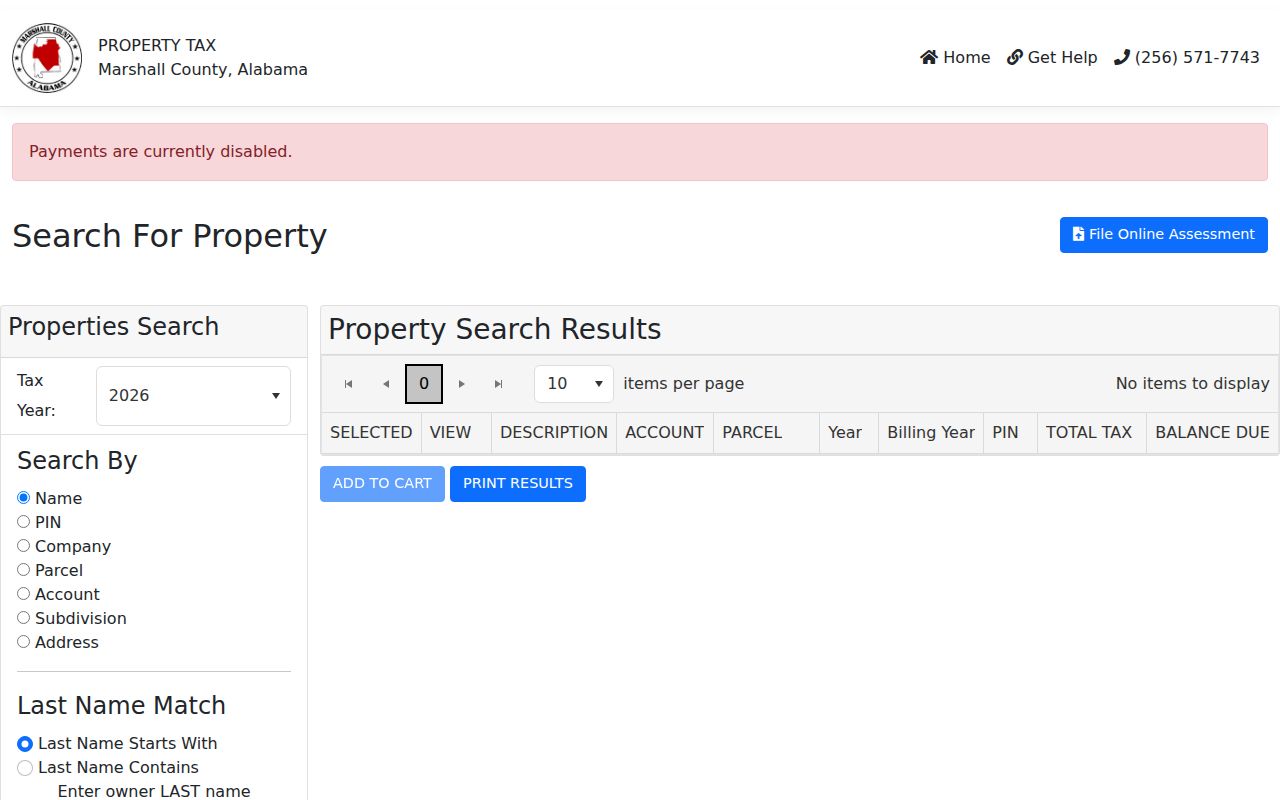
The county's property search page opens the official account for every parcel. Open the correct parcel and tax year before interpreting any value field.
| Value | What It Is | Where |
|---|---|---|
| Fair-market/appraised | County's full-value tax estimate | Revenue property card |
| Assessed value | Appraised value times classification ratio | Revenue assessment |
| Taxable value | Assessment after applicable exemptions | Tax calculation |
| Recorded consideration | Amount associated with a conveyance | Probate deed |
Marshall County guidance assigns Class III status to farm and owner-occupied residential property. The assessment ratio is 10 percent. Exemptions can then lower the taxable base, so assessed value equals neither a sale price nor a tax owed.
Look Up Marshall County Property Value
Locate the right parcel first. Then transcribe each value label with its year, rather than copying one prominent number and calling it the property's market price.
- Search the county property portal by address or identifier.
- Record the appraised, assessed, and taxable fields with their tax year.
- Check land and improvement components separately.
- Read the latest deed in Probate records for transaction context.
- Assessed value
- The appraised figure after applying the statutory property-class ratio.
- Market / appraised value
- The county's full-value estimate for the assessment process.
- Level of assessment
- The percentage used to convert appraised value to assessed value.
Apply Marshall's Class III Ratio Correctly
Marshall's guidance assigns farm and owner-occupied residential property to Class III. The assessment ratio is 10 percent. It converts an appraised or fair-market figure into assessed value for the tax calculation. That is all it does. A Class III house is not worth ten percent of its market estimate.
Verify classification on the record itself. Other classes follow different rules. Keep the field labels instead of collapsing every number into "value."
See How Homestead Exemptions Change Taxable Value
Marshall publishes four homestead categories, H1 through H4. Each carries different qualifications. An exemption lowers the taxable base. It does not rewrite market evidence or recorded consideration. Before comparing two parcels, check both classification and exemption status.
Eligibility and application belong to the Revenue Commissioner, not to a portal display. Treat the online record as a starting point. Follow current office guidance when a value question becomes an exemption question.
Account for Improvement Lag
Improvements reported after October 1 can take up to two years to appear in the tax value, under county guidance. A new structure may show up in imagery first. Municipal permit records can also move faster. Record the assessment year and the improvement data date whenever you compare a parcel with current conditions. This lag explains why a recent sale and an assessment can diverge. Neither record is wrong. They measure different events on different schedules.
Recorded Sales Are Not Appraisals
A deed's consideration can hint at a past transaction. It reveals nothing about terms, concessions, relationships, or condition. Some instruments are not arm's-length sales. Confirm the deed type and legal description before weighing the amount against the assessment. The recording sheet also requires a Revenue value slip, and deed tax is calculated from consideration. That administrative bridge links recording and assessment without turning consideration into a current market opinion.
Millage Changes Marshall Tax
Marshall County uses distinct millage districts. Albertville, Arab, Boaz, Guntersville, and rural areas each levy differently. Identical assessed values can still mean different tax bills. City limits, tax district, and mailing city are not interchangeable. A mailing address in a ZIP does not prove corporate limits. Confirm jurisdiction before explaining any tax difference. This matters most near annexation edges.
Add Lakefront Context Without Inventing Value
Lakefront parcels demand extra research: shoreline, flood, easement, road access, plat, and legal description. Those facts explain why look-alike parcels differ. The GIS polygon itself sets no value. Use the Marshall GIS to understand geometry. Use the deed to understand the described interest. For a sale, estate, or dispute, a qualified appraisal can weigh condition, rights, and comparable evidence. Tax records still matter, since they supply a consistent county assessment framework with historical year labels.
Read Marshall's Annual Abstracts as Context
Revenue publishes annual abstract summaries covering 1998 through 2025. They trace the county's broader assessment base over time. They replace no property card. They supply no sale appraisal either. Match the year when connecting a trend to a parcel. County-wide change can reflect new construction, classification shifts, exemptions, and roll maintenance as well as prices, so do not credit the market without support.
Compare the Same Value Field Across Parcels
Match tax year, classification, exemption status, land-versus-improvement components, and millage district when reviewing nearby parcels. Mixing taxable and appraised values misleads badly. Confirm comparable interests and conditions too. The GIS buffer can find geographic neighbors. Geography alone does not create valuation comparables, since shoreline, access, shape, improvements, and recorded rights may differ sharply.
Document a Marshall Property Value Check
| Field | Record with it | Question answered |
|---|---|---|
| Appraised value | Revenue card and year | County full-value estimate |
| Assessed value | Classification calculation | Value before exemptions and millage |
| Taxable base | Tax record | Amount after applicable adjustments |
| Consideration | Recorded deed | Historical transfer context |
Write each label exactly as shown, and retain the source date. Never infer a missing field from another number.
Separate Value From the Marshall Tax Bill
A Marshall County tax bill tells you what is owed. It does not say what a parcel is worth. Classification rates, exemptions, millage districts, and billing status all shape the final figure. The portal shows Total Tax and Balance Due fields. They are poor stand-ins for assessed value. A zero balance can sit on a very valuable piece of land.
Due dates and interest are tax matters. So are delinquency and lien sales. They belong to the tax side of property records, not to value research. Stay with appraised, assessed, and taxable figures, plus land, improvement, and recorded-sale context. Pull the tax bill only when the calculation itself is the question.
Access Current Marshall Value Records
The county portal is the fastest route for a current Marshall County property search. If a detail page will not load, call Revenue in Guntersville or Albertville. Have the Account, Parcel, PIN, address, owner of record, and the tax year you need ready. Request the property-card fields. These include land and building values, classification, exemptions, any last-sale entry, and the roll date.
Keep the other channels straight too. The Probate index and recorded deeds give historical transaction context. A qualified appraiser gives a real market opinion. Separating them means never asking a deed clerk to appraise property. It also means never reading a mass-appraisal record as sale advice.
Know What Marshall's Assessor Value Is Not
The Marshall County assessor value is a tax assessment. It is not a promised sale price or a transaction appraisal. Keep that distinction in mind when you pull figures from Marshall County property records, since improvements reported after October 1 may take up to two years to show up in the assessment.
Value versus price. A Marshall County assessment does not predict a sale; use a qualified appraisal when a current market opinion is required.