
Read Marshall County's Current Owner Record
Start with the Marshall tax portal. Its search modes cover Name, PIN, Company, Parcel, Account, Subdivision, and Address. Every result is tied to a tax year. Date it before calling anything current. That owner-of-record check begins with the Marshall property search.
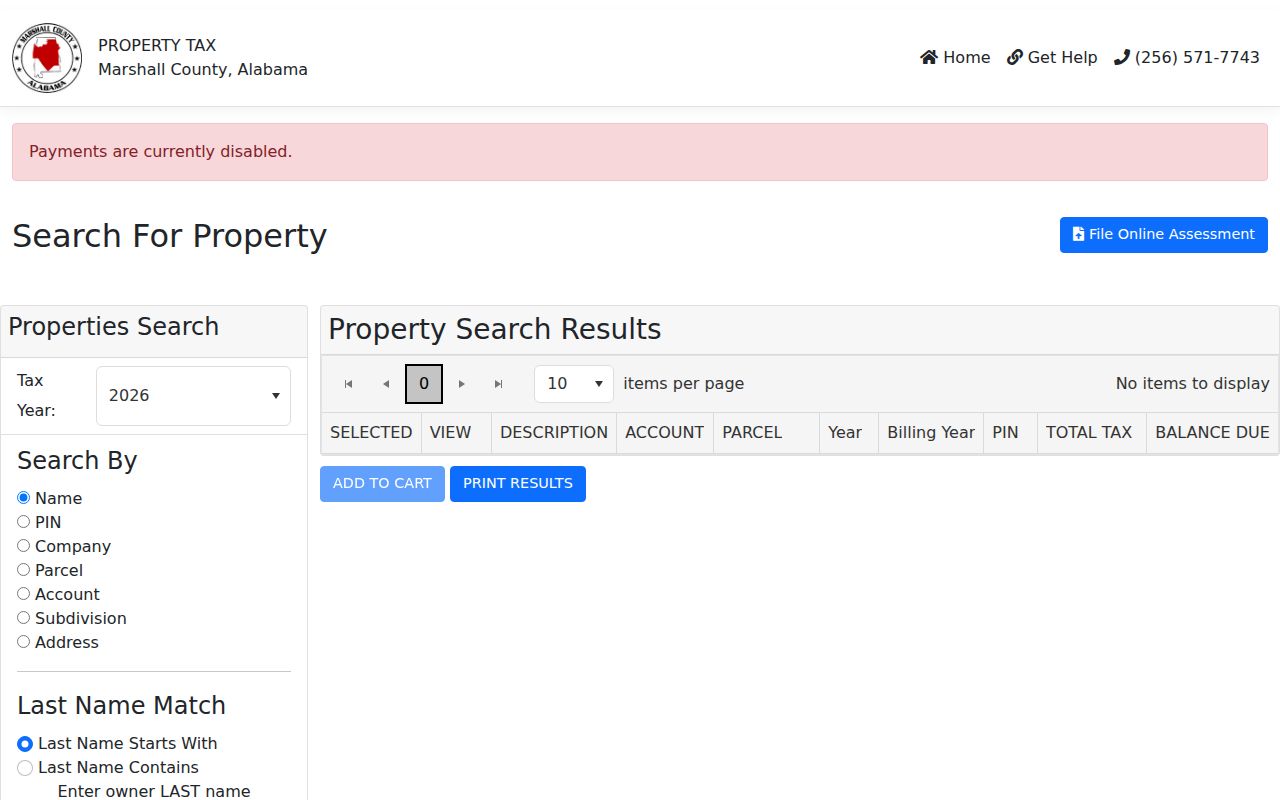
The portal supplies the lead; the deed settles it.
| Owner of Record | Name displayed for the tax account |
|---|---|
| Vesting / Tenancy | Exact deed language describing how an interest is held |
| Mailing Address | Tax-notice destination, not occupancy proof |
| Situs Address | The property's physical address |
| Deed Reference | Book/page or instrument lead when exposed |
| Source Date | Tax year or recording date controlling the answer |
Revenue keeps the tax cards and the mapping. It does not decide title, and its mailing and situs addresses often differ for an entity, trust, estate, or absentee owner.
Watch the Recent-Sale Gap
A deed can record before the roll updates. The GIS label and tax bill lag too. Marshall guidance warns that a buyer may receive a bill in the prior owner's name, so check the newest recorded conveyance rather than guessing which name controls.
Timing matters. The roll can lag a sale; the newest applicable recorded deed is the stronger current-ownership source.
Separate Mailing Address From Marshall Situs
Situs locates the land. Mailing routes the notices. Neither one proves occupancy, so keep the fields separate when writing about a boundary, purchase inquiry, easement, or record correction.
Date the Marshall Tax Record
The portal displays a 2026 collection year. Its result grid separates Year from Billing Year. A live valid-tax-years endpoint sits behind it. Account, Parcel, PIN, Total Tax, and Balance Due round out the grid. Those fields describe an account at one point in the tax cycle. They do not establish title. Save the exact year beside any owner name. A later reader can then tell whether the result preceded a sale or correction. Payment functions may be switched off on the portal without any change in custodianship. If a detail screen fails, keep the identifiers handy. Contact the Revenue Commissioner at 424 Blount Avenue, Suite 124, Guntersville. The Albertville office sits at 412 Martling Road. The assessor line is 256-571-7753.
Check the Instrument Type Before Confirming
The newest index row is not always a conveyance. It could be a mortgage, release, assignment, correction, or plat. Confirm that the document actually transfers the relevant interest. A correction deed can revise a legal description without any new sale. A release covers encumbrances. Record type, grantor, grantee, record date, and book/page. Marshall's recording sheet demands a legal description on deeds and mortgages. But it skips the parcel number. That gap makes the description and prior-reference trail vital whenever a tax identifier changes. The Probate office performs no searches. So use the portal, inspect records, or arrange a documented copy path.
Resolve an Estate or Entity Owner
An estate owner changes the workflow. Locate the probate case for authority first. Then confirm the operative deed or order in the land index. A will alone never substitutes for a required conveyance. For an LLC, test the exact entity name and its variants in Alabama business records. Never substitute a registered agent's name for the property's owner. Trusts demand equal care. The roll may show a trustee, a trust name, or an abbreviated form. Report exactly what the source says. Compare it to the grantee and vesting language, and leave unnamed beneficiaries out of it.
Use GIS as a Current-Owner Cross-Check
The Marshall ISV viewer pinpoints the mapped tract and may expose More Details or Deed Documents. It helps catch a wrong address. It also sorts similar street results. Revenue maps for tax purposes, though, and disclaims authority to decide ownership. A GIS label is corroboration, not proof. Lakefront, subdivision, and road-edge parcels need extra care. Shoreline, geometry, easement, and deed description may not align visually, so match the legal description before crediting the owner field.
Document a Marshall Owner Conclusion
A solid owner note states its sources plainly. List the tax portal query, account or parcel ID, tax year, and displayed owner. Add the deed instrument type, grantee, record date, and legal-description match. Disagreement means a mismatch to resolve. Never merge competing names into one unsupported conclusion. For purchase, estate, lien, or boundary stakes, get the recorded image and qualified help, since a portal lookup is not a title opinion.
Confirm the Current Marshall County Owner
Take the tax lead to the recorded instrument through Marshall Probate. Match the legal description and parcel clues, not just the party name.
- Save the owner field, parcel ID, tax year, and legal-description clue.
- Find the newest relevant deed and verify its grantee and record date.
- Check later correction deeds, foreclosure deeds, or estate instruments.
- Use state entity records when the grantee is a company.
- Owner of record
- The party a dated tax roll or recorded instrument identifies.
- Vesting
- The deed language stating how named grantees hold an interest.
- Registered agent
- An entity's service contact, not automatically the property owner.
Reach the Current Owner Through Official Records
Use the published tax mailing address or an entity's registered-agent route. Situs proves nothing about residence. Keep it to a boundary, easement, purchase, or correction.
Monitor a Marshall Owner Name
Marshall County property owners can enroll in the free R.E.A.A.C.T. service, which watches county recording activity for registered name variants. Alerts on common surnames need careful verification, and coverage stops at the county line. An alert alone proves neither fraud nor a change on the tax roll.
Check Current Owners at County Offices
Two Revenue offices serve the county. One sits at 424 Blount Avenue, Suite 124 in Guntersville, and another is at 412 Martling Road in Albertville. Visit either counter when the online tax portal hides a property-card field. The staff can also help when a parcel number will not resolve. Probate's real-estate recording office sits at 425 Gunter Avenue, Suite 110 in Guntersville. That office indexes recorded conveyances instead of handling tax assessment. Keep the split straight during a current-owner check. Revenue can show the dated owner and the assessment card. Probate holds the indexed, recorded instrument. Neither office will merge the two systems into a single title conclusion.
Handle a Current Owner Mismatch Transparently
Start with the timeline. Compare the tax year against the deed recording date. Next confirm the parcel number, the legal description, and each party's role. Look for later corrections, estate instruments, foreclosure deeds, or tax deeds. Any other conveyance may appear in the deed records. When the newest instrument does not plainly touch the same land, leave the owner question open. Review the documents before drawing a conclusion. A candid research note works best here. It might state that the 2026 tax result shows one name. A later deed may show a different grantee, with the legal-description comparison still pending. That beats silently picking one source. It also flags the precise next step for a title professional, attorney, or custodian.
Contact a Marshall County Owner Lawfully
The published tax-mail address is the proper public channel for any property matter. Do not infer where someone lives, publish a resident profile, or request protected personal data.
Lawful use. Public owner information may support legitimate property research, never stalking, harassment, intimidation, or harm.