
Start a Marshall County Search
Three offices hold the pieces. The Revenue Commissioner keeps the assessment and tax roll, the Judge of Probate records deeds and land instruments, and Revenue GIS supplies the parcel map. Start from whatever fact you already have. An address works well in the tax portal. An owner name may return several accounts. A PIN, parcel number, account number, or subdivision name can narrow a stubborn result.
Label every identifier with its source and date. Marshall's instructions set no single parcel-number format, so never swap PIN, Parcel, and Account values between systems. The tax owner, deed grantee, GIS update, and permit applicant can differ. Official records are evidence, but a portal search is not a title opinion or a survey.
- Search the county tax portal by address, name, company, PIN, parcel, account, or subdivision.
- Copy the account, parcel, PIN, tax year, description, and owner spelling.
- Confirm the latest transfer in the Probate land-record index.
- Check the Revenue record for value, exemptions, total tax, and balance.
- Use Revenue GIS for mapped context, then request an official copy when needed.
Marshall County Records Custodians
Custody splits by function. Probate records the instruments. Revenue assesses, maps, bills, and collects for roughly 64,000 parcels. The Circuit Clerk holds civil files that may affect land, though a court party result never substitutes for a recorded deed.
Marshall County Judge of Probate
425 Gunter Avenue, Suite 110
Guntersville, AL 35976
256-571-7767 ext. 208
Marshall Revenue Commissioner
424 Blount Avenue, Suite 124
Guntersville, AL 35976
256-571-7753
Marshall Circuit Clerk
424 Blount Avenue, Suite 201
Guntersville, AL 35976
256-571-7785
Marshall Portal Fields Decoded
The county property portal offers Name, Company, PIN, Parcel, Account, Subdivision, and Address modes. Address mode splits street number from street address. Name mode matches on last name with an optional first name. Results label Description, Account, Parcel, Year, Billing Year, PIN, Total Tax, and Balance Due.
| Field | Useful for | Limit |
|---|---|---|
| Account, Parcel, PIN | Matching county systems | Labels are not interchangeable |
| Billing Year | Dating the tax record | Not the deed date |
| Total Tax | Charge for that row | Not market value |
| Balance Due | Displayed unpaid balance | Verify before a deadline |
The portal can show states that change, such as a current tax year or a disabled-payment notice. Treat those as temporary screen settings, not proof that online payments are gone for good.
Marshall's Online Deed Window
Deed research here runs on two tracks. The Land Title Association of Alabama lists Marshall land records online from 1990 to current. The Judge of Probate records deeds, mortgages, assignments, and releases. Its recording sheet states plainly that staff do not perform searches for requesters, so use the portal, visit the office, or arrange the proper copy path.
Older ownership work moves to deed books, direct and reverse indexes, microfilm, and archives. FamilySearch's Alabama wills and deeds collection works as a finding aid. Valley Leaves transcriptions of Marshall Deed Book A and indexes A through T can point toward an official book reference. Confirm any transcription with Probate.
Free Marshall Recording Alerts
R.E.A.A.C.T. is Marshall Probate's free real-estate activity alert. An owner registers a name and email, confirms the request, and may add name variants. A matching new recording triggers a notice. The program covers this county only, common names can create false matches, and it does not block a document from recording.
Let each alert prompt a look at the official instrument itself. The program's guidance routes suspected fraud to official verification and, where fitting, the Sheriff or an attorney. It protects your own name. It is not a tool for watching someone else.
Marshall County Property Record Types
No single record answers every land question in Marshall County.
| Record Type | What It Documents | Kept By | Access |
|---|---|---|---|
| Deeds and instruments | Transfers, liens, releases, easements | Judge of Probate | Portal, office, copy request |
| Assessment and tax | Tax owner, values, class, balance | Revenue Commissioner | Free portal and offices |
| Parcel map | Mapped tract and nearby parcel IDs | Revenue GIS | Free ISV viewer |
| Plats | Subdivision, lots, blocks, streets | Judge of Probate | Index and older books |
| Permits | Proposed work and applicant details | City office | City form or request |
Match the question to the custodian. Use the recorded instrument for a transfer, Revenue for assessment and tax, GIS for map context, and a plat for the subdivision layout. City permit data must be reconciled with county land records before it settles anything.
Marshall Values Have Three Levels
Revenue treats fair-market or appraised value as the full estimate behind assessment. Assessed value then applies the state property-class ratio. Owner-occupied homes and farms generally fall in Alabama Class III at a 10 percent ratio under Marshall's published guidance. Exemptions can shrink the taxable base after that step.
None of these figures predicts a sale price. Improvements reported after October 1 may take up to two years to surface, and a buyer can receive a bill still naming the prior owner. Record the tax year, owner label, and improvement status separately.
Marshall GIS Shows Map Context
The Revenue GIS viewer documents identify and layer tools. Imagery and basemap options sit alongside attribute search and shape search. Buffer, measurement, print, and bookmark tools are listed too. Coordinate, markup, and CSV or Excel export round out the set. Selecting a parcel can open More Details and Deed Documents.
A GIS polygon is not a survey. Around Lake Guntersville, several questions need different answers. Shoreline, flood elevation, and road access each carry their own weight. A plat lot, an easement, and deed metes-and-bounds language answer others. Use the map to locate sources, never to settle a legal line.
Marshall Tax Lien Timing
Marshall property tax comes due October 1 and stays timely through December 31. Delinquency and interest begin January 1. After February 28 the county stops accepting checks for delinquent payments. It sends traceable notices in March, and it schedules the tax-lien auction for the first Tuesday in May.
A tax lien is not fee title by itself. Verify the live account, notices, redemption posture, and legal effect with the custodian. Do this before relying on any auction entry.
Marshall's Moving County Seats
Marshall County came together in 1836, and its county seat kept moving. Claysville came first, then Marshall or Wyeth City, then Warrenton, and finally Guntersville. So an old deed may carry a courthouse town that no longer hosts one. The Probate office works from Guntersville today, and the Circuit Clerk also serves Albertville.
That place-name trail matters more than it sounds. An early Marshall County deed may seem filed in the wrong town. Note the historic name in your search log. Then track down the actual deed-book and index reference behind it.
Three Marshall City Record Trails
Albertville, Boaz, and Guntersville each keep their own planning, zoning, permit, and inspection files. The county holds the deeds, tax accounts, and parcel maps. A permit applicant is not always the deed owner of record. And a city approval may still need county recording afterward.
Status labels deserve a close read. Albertville's 2026 zoning work proves the point. Boaz's ordinance and building-code activity does too. So do Guntersville's waterfront files. Sort every item into adopted, approved, introduced, or proposed. Then reconcile the municipal file against Probate and Revenue before trusting it.
When Marshall Search Falls Short
Broaden the search before giving up. Try road-name variants, a shorter owner string, a company name, or a subdivision. A prior tax bill shows the exact parcel number. A ZIP city label does not prove municipal limits, either. Deeds that predate the online window live in Probate books. They also live on microfilm and in direct or reverse indexes.
A 2023 abstractor's note on Marshall County offers one more lead. Difficult deeds sometimes surface with parcel-card materials at the Tax Assessor. Treat that as an insider tip rather than an official promise. Confirm access with Revenue. For other county administrative records, Alabama Code §36-12-40 grants an inspection and copying right. That right is subject to exceptions. Marshall's request form prices copies at $0.25 per page and research at $10 per half-hour.
Marshall's Official Search Screens
The live Marshall property search is the sensible first stop for a known address or owner. Start with your strongest field. Its tabs and tax-year control reward that discipline. Branch out only when a result fails to match the tract in question.
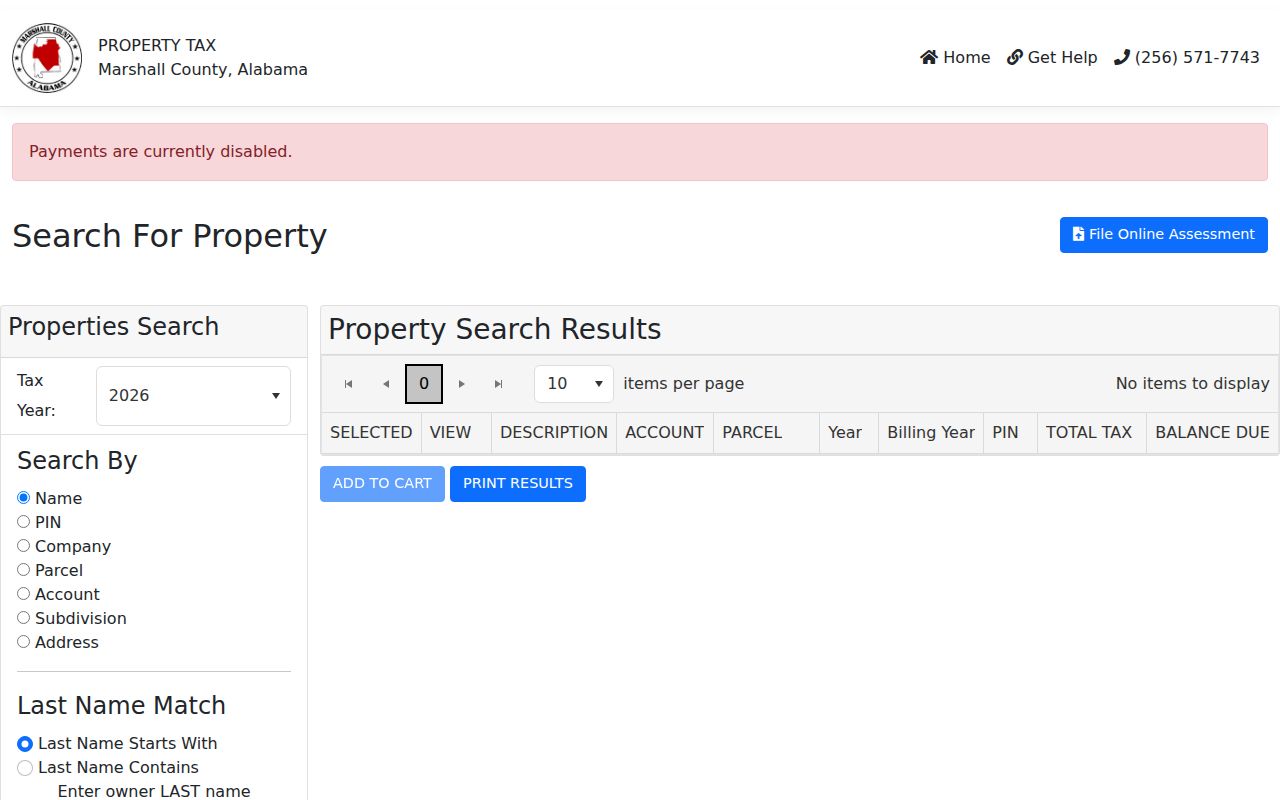
Once the account appears, preserve its labeled identifiers before moving on. The deed or GIS layer answers the next question, not the parcel screen itself. The Marshall Probate portal comes next when a recorded transfer matters. It splits land records, probate cases, account functions, instructions, terms, and the R.E.A.A.C.T. alert program into separate areas. Each area handles one task.
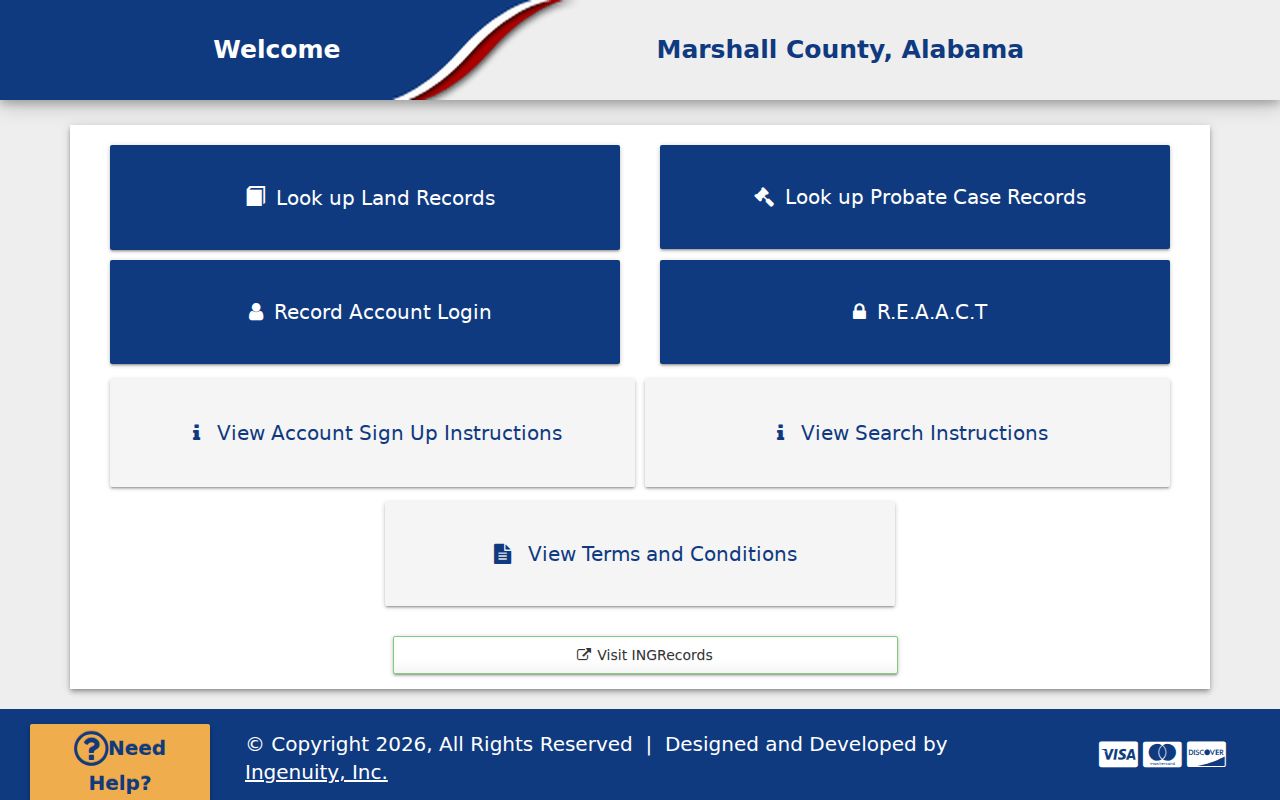
The county's recorded-instrument system opens from this landing page. Let the deed index confirm the tax owner's name, not merely repeat it.
Marshall Records Need Source Checks
Every answer in Marshall County property records is strongest when it points to the record created for that purpose. The deed proves a conveyance. The assessment roll backs tax administration. A live account shows the current balance. The plat lays out a subdivision, and a survey settles a disputed line. Collapsing those roles into a single owner or map field invites error.
Names deserve equal care. Estates, trusts, companies, initials, and changed spellings can split one ownership trail into several search variants. So run each form before concluding anything. A common-name match is weak. It needs a parcel number and legal description. A short source log helps most. Note the portal, the query, the field label, the record date, and the retrieval date. That log makes conflicts visible and gives the custodian enough detail to help.
When online systems do not settle an issue, Marshall County offers several direct channels. Probate answers deed and real-estate questions at its Guntersville recording desk. Revenue keeps offices in Guntersville and Albertville for assessment and tax questions. The Circuit Clerk provides a public-access computer in Guntersville. That terminal matters. Use it when a property dispute appears in a state trial-court file. A focused Alabama Open Records Law request can seek a county administrative record that is not posted. It is subject to statutory exceptions and the office's custody. The county request form asks for identification, a specific record, and a reason. It also lists copy and research charges.
Older land work has its own fallback chain. The online deed window is listed from 1990 forward, but Marshall County's recorded history began long before electronic access. Direct and reverse deed indexes, deed books, microfilm, FamilySearch images, and Valley Leaves transcriptions reach past that cutoff. Guntersville Public Library adds newspapers from 1880 through 2012 plus genealogy resources. An archive clue is not the deed. Record the old name, the book and page, the tract wording, and the source. Then return to Probate for the official instrument. That habit matters where historic county-seat names, lake developments, or changed road labels break a modern address search.
City records add a final layer. Albertville's permit form captures parcel location, subdivision, lot, block, zone, improvement type, cost, owner, and contractor. Its zoning work includes a current map-modernization process. Boaz planning materials separate preliminary approval from a final plat. They cite recorded Dogwood Farms book and page references. Guntersville keeps its zoning map, annexation files, building permits, historic review, and short-term-rental controls apart from the county tax parcel and the Probate deed. Municipal files describe use, approval, or work, and they never replace the county ownership record.
Privacy limits also apply. Public availability is not permission. It does not make every connected fact safe to republish. Alabama law shields certain addresses in protection-order files and gives defined nondisclosure to some law-enforcement information. Birth and death records follow their own restricted periods. Use parcel, deed, value, and permit information for lawful property research. Direct confidentiality or correction questions to the custodian. A county record cannot be removed or altered by a private reference site.
Limits of Marshall Property Records
Marshall County property records can show a deed grantee, the tax owner, assessed values, balances, legal descriptions, recorded liens, and plats. Mapped parcels appear too. They have real limits. Records alone cannot prove occupancy. They cannot settle a boundary, expose every unrecorded claim, or guarantee clear title. Mailing and situs addresses serve different roles. An estate, trust, or business entity may appear instead of a person's name.
Use these records for purchase research, estate work, assessment review, and fraud monitoring. They also serve boundary questions and civic transparency. Then confirm decisive facts elsewhere. A custodian, a licensed surveyor, or a qualified title professional is the right authority.
A careful search preserves negative findings. If no deed appears, note the name form and the date range. Also note the instrument types tested. If GIS and the tax description point to different tracts, save both identifiers. Ask Revenue which map update applies. Silence in one online index does not prove a record never existed, especially before the listed online coverage window.
Lawful use. Marshall County records support lawful property research. They do not replace title work or a survey, and must never be used to harass or harm anyone.
Date Every Marshall Record
Keep dates on everything. A short log of custodian, record date, tax year, and retrieval date shows whether a later mismatch reflects a deed, roll, map, or permit update.